
If you grew up playing video games in the 1980s or 1990s, you probably remember something that younger gamers don't always understand:
Some of those games were really hard.
You might spend hours trying to get through a level, finally reach the boss, lose your last life—and suddenly find yourself back at the beginning.
So why did older video games seem so much harder?
Arcade Games Were Designed to Keep You Playing
One reason goes all the way back to the arcade.
Arcade games needed to make money. Every time you lost, there was a good chance another quarter was going into the machine.
That meant games needed to be challenging enough that players couldn't simply finish them on a single quarter.
As video games moved into the home, some of that arcade-style difficulty came with them.
You Didn't Always Have a Save Button
Today, we're used to games automatically saving our progress or giving us frequent checkpoints.
Older games didn't always have that luxury.
Some games had no save feature at all. Others used passwords that allowed you to return to a certain level.
If there was no save or password system, turning off the console could mean starting all over again the next time you played.
That certainly gave you some motivation to keep going.
A Few Lives Had to Last
Remember seeing 3 Lives at the beginning of a game?
Those lives mattered.
Lose them all, and you might have to start over. Extra lives were often hidden, difficult to earn, or both.
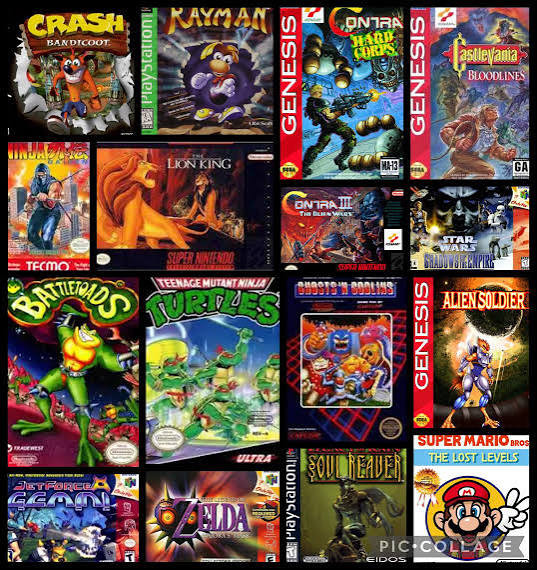
Games such as Contra, Battletoads, Ninja Gaiden, and Ghosts 'n Goblins became famous for putting players' patience and skills to the test.
You Had to Learn by Playing
Older games often didn't explain everything.
There weren't always lengthy tutorials showing you exactly what to do. You learned enemy patterns, discovered where traps were hidden, and figured out how to defeat bosses by trying again and again.
Sometimes you had to lose before you learned what was coming.
And then you remembered it for next time.
Games Needed to Last
Many older games were relatively small compared with today's enormous games.
Developers couldn't fill them with hundreds of hours of content, massive open worlds, and endless side missions.
Difficulty helped make a shorter game last longer.
A game that might take an experienced player only a few hours to complete could take a new player weeks—or even months—to master.
Then There Were the Secrets
Older games also loved hiding things from us.
Secret rooms, hidden power-ups, shortcuts, extra lives, and special items could make a difficult game much easier—if you knew where to find them.
That's also part of what made cheat codes, gaming magazines, strategy guides, and tips from friends so valuable.
Sometimes knowing one little secret could finally get you past the level that had been driving you crazy.
Were Older Games Really Harder?
Not every old game was difficult, and there are certainly plenty of challenging modern games.
But older games often gave players fewer chances to recover from a mistake. Limited lives, fewer checkpoints, no saves, and less guidance could make even a fairly simple game feel unforgiving.
And strangely enough, that's part of what made beating one feel so good.
When you finally defeated that boss or finished that level after dozens of attempts, you earned it.
We Kept Coming Back Anyway
Maybe that's the best part.
The games frustrated us. We yelled at the television. We put the controller down and swore we were finished.
Then we picked it back up and tried again.
At Game Repair, we've watched video games change for more than 36 years. Games today may look and play very differently, but there's still something satisfying about putting an old cartridge in a console and seeing whether you can beat the game that gave you so much trouble years ago.
So, what retro game gave you the most trouble—and could you beat it today?